Showing posts with label alzheimers. Show all posts

Sunday, November 22, 2009

Worried About Alzheimer's Disease ?

Regardless of age, you should be worried about Alzheimer's disease.....

Worried About Alzheimer's? You Should Be
Regardless of age, you should be worried about Alzheimer's disease. A Harris Interactive poll showed that 100 million Americans are touched by Alzheimer's. The same poll showed that more than 33 million Americans are worried about getting Alzheimer's.
To continue reading -- go here.

Subscribe to The Alzheimer's Reading Room--via Email
Worried About Alzheimer's? Tip #1 Exercise
If exercise can have this kind of dramatic effect on my mother who already suffers from Alzheimer's, you really need to start wondering to yourself -- is this the way to beat or delay the onset of Alzheimer's disease?
To continue reading -- go here.

Original content Bob DeMarco, Alzheimer's Reading Room

Worried About Alzheimer's? The Holy Grail of Exercise
In graduate school I studied risky decision making and statistics. I can say with confidence, if you are not exercising you are making a risky decision, and you are increasing the odds that you might suffer from Alzheimer's, heart disease, or any number of diseases that are catastrophic in the long run.
To continue reading -- go here.


Worried About Alzheimer's? Using Google Search Promotes Memory and a Healthy Brain
A brain study conducted by Dr. Gary Small, a UCLA expert on aging, found that people who search the Internet using Google use more of their brain while engaging in this activity. This suggests searching on the Internet may train the brain -- that it may keep it active and healthy.
To continue reading -- go here.

Worried about Alzheimer's? If You are a Baby Boomer You Should Be
I'm standing outside FAO Schwarz on Fifth Avenue in New York City. In fifteen minutes I see about 100 people coming and going. I ask myself? Did I just see 8 people that are going to suffer from Alzheimer's during their lifetime?
To continue reading -- go here.

Worried About Alzheimer's? Yoga for Your Face
There are a long list of scientific articles that indicate exercise reduces the risk of Alzheimer's, dementia, heart disease, diabetes, and lowers LDL cholesterol. You might chuckle when you see the yoga exercises for you face. They work.
To continue reading -- go here.


Worried About Alzheimer's? Nintendo Wii Hula Hoop
You'll notice you don't actually need a hula hoop. You just mimic the movement. In the case of my mother, I would have her hold on to a high backed chair. The combination of the music and video turns this into a game -- and lots of fun.
To continue reading -- go here.

Worried about Alzheimer's? Five Ways to Protect Yourself
Protect yourself against Alzheimer's or roll the dice? Here are five good ways to protect your brain and put the odds in your favor.
To continue reading -- go here.

Sunday, September 27, 2009

The Metamorphosis of This Alzheimer's Caregiver (Part One)

My name is Bob DeMarco, I am an Alzheimer's caregiver. My mother Dorothy, now 93 years old, suffers from Alzheimer's disease. We live our lives one day at a time.


I'm fortunate in two ways. I picked great parents, and God and my parents blessed me with an ability to read fast, and absorb information.

My brain is wired to view everything as a system. This allows me to see all the parts when I encounter something new, or when I am trying to figure things out.

When I first learned my mother was suffering from dementia, I quickly learned you could put everything I knew about dementia and Alzheimer's in a thimble.

So, I started reading. The more I learned the more I wanted to know. I learned a great deal about Alzheimer's disease--including the science. It helped me understand a very mystifying disease. It helped me to put a frame around something that is difficult if not impossible to describe.
Original content Bob DeMarco, Alzheimer's Reading Room

blog it

Popular articles at the Alzheimer's Reading Room.


Original content Bob DeMarco, Alzheimer's Reading Room

Tuesday, July 7, 2009

Is your Elderly Parent Taking Their Medication as Prescribed? Doubt It

I learned the hard way that my mother was not taking her hypertension medicine as prescribed. I discovered this many months after she was diagnosed with dementia and probable Alzheimer's.

If I had paid attention sooner, would it have made a difference in her diagnosis? I'll never know for certain.

This I believe. If I had paid attention, I would have realized sooner that something was wrong. Very Wrong. This would have allowed me to get my mother taking her medication as prescibed and gotten her diagnosed sooner.

Here is how I discovered my mother was not taking her prescription medicines as prescribed.

I went to the pharmacy and asked for a print out of the previous 12 months. When I looked, I was aghast.

If you have an elderly parent here is my advice to you. Don't be lazy, get the printout from the pharmacy. After a quick review you will know if the medications were purchased and if they were taken on schedule.

You can put you head in the sand and wait for Alzheimer's or dementia to present in someone you love. Or, you can start paying attention to the little things. The little changes in behavior that come with dementia long before it is detected.

I guess you could say we were fortunate. Two of the worst things that can happen from not taking hypertension medication are a heart attack or a stroke.

Early detection of Alzheimer's is important and critical to the quality of life your loved one is likely to experience. We got there early and my mother has benefited.

Enough said.
Subscribe to The Alzheimer's Reading Room

Patients Can't Recall Their Medication to Tell Doctors
“We think doctors may be prescribing more medications because the patients aren't giving them the right information about what they are taking ..... I've seen patients who continued on drugs that I told them to discontinue and stop taking drugs I never told them to stop using."
Doctors rely on patients to accurately tell them what prescription medications - and what dosages -- they are taking in out-patient visits. (A patient's chart may not always be available or complete.) That information is essential for physicians to monitor whether a drug is working, and whether it may have adverse interactions with any new medications prescribed.

Depending on patients' recall of their drugs, however, may be dangerous to their health.

New research from Northwestern University's Feinberg School of Medicine has found that nearly 50 percent of patients taking antihypertensive drugs in three community health centers were unable to accurately name a single one of their medications listed in their medical chart. That number climbed to 65 percent for patients with low health literacy.

“It was worse than we expected,” said lead author Stephen Persell, M.D., an assistant professor of medicine, and of the Institute for Healthcare Studies at the Feinberg School, and a physician at Northwestern Memorial Hospital. “It means doctors can't ask patients to tell them the medications they are taking for their chronic conditions like hypertension. It's very hard to get at the truth of what medications the patient is actually taking.”

The study will be published in the November issue of the Journal of General Internal Medicine.

The Northwestern study looked at 119 patients, average age 55, from community health centers in Grand Rapids, Mich. Researchers asked them to name their antihypertensive drugs and then compared their answers to the drugs listed in their medical charts.

While the study focused on low-income patients, Persell said other patients likely have similar trouble recalling the names and dosages of all their medications, particularly those who take a lot of different drugs and the elderly, who may have cognitive limitations.

The gap between what medications a doctor thinks a patient is taking - and what a patient actually takes - is a new focus for improving the safety and quality of health care. One third of the nation's 1.5 million adverse drug events occur in out-patient settings, resulting in a cost of $1 billion annually. Persell thinks this "knowledge of medication gap" may be one of the causes.

The goal is "medication reconciliation," a term in the healthcare field that means patients and their healthcare providers understand and agree on the medications the patients are using and should be using.

Persell's study also showed patients with low health literacy were prescribed more antihypertensive medications than other patients and had higher blood pressure by about five points.

“We think doctors may be prescribing more medications because the patients aren't giving them the right information about what they are taking,” he said.

Even examining patients' medical records won't necessarily tell a doctor what pills a patient is swallowing. Persell said some patients continue to fill old prescriptions even if a doctor has changed the dosages or the medication.

“I've seen patients who continued on drugs that I told them to discontinue and stop taking drugs I never told them to stop using," Persell said.

The solution is to ask patients to bring all their current medicine bottles to doctor appointments, so the physician can compare them to what has actually been prescribed in the medical charts, Persell noted. That's how he learned a patient he had switched to a cheaper version of a drug continued to take the older expensive one along with the new one, so he was double dosing himself.

"This could have caused a dangerous drop in his heart rate and blood pressure," Persell said.

The Northwestern study indicates a need for future research to address how patients' inability to name their medications -- particularly those with limited health literacy -- impacts hypertension control and drug safety, Persell said.

The study was funded by a career development award from the Agency for Healthcare Research and Quality, a Centers for Disease Control and Prevention Career Development Award and the Michigan Department of Community Health.
Bob DeMarco is an Alzheimer's caregiver and editor of the Alzheimer's Reading Room. The Alzheimer's Reading Room is the number one website on the Internet for advice and insight into Alzheimer's disease. Bob taught at the University of Georgia, was an executive at Bear Stearns, the CEO of IP Group, and is a mentor. He has written more than 700 articles with more than 18,000 links on the Internet. Bob resides in Delray Beach, FL.

More from the Alzheimer's Reading Room


Original Content the Alzheimer's Reading Room

Sunday, June 28, 2009

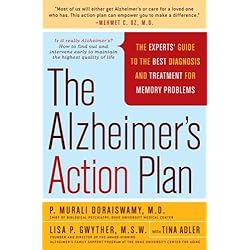
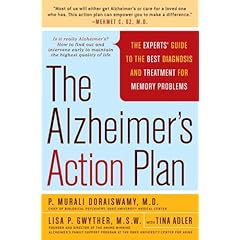
The Alzheimer's Action Plan

“Most of us will either get Alzheimer’s or care for a loved one who has"

"This book is the most comprehensive and up-to-date guide for the diagnosis and management of Alzheimer's disease. Whether you are a health care professional or have Alzheimer's in your family or are simply interested to living to an old age, this book is a must read."
--Deepak Chopra, M.D., New York Times bestselling author of Perfect Health: The Complete Mind/Body Guide


Insight and Advice about Alzheimer's Disease
Subscribe to The Alzheimer's Reading Room
"Memory does matter. Adults across the life cycle are asking questions, many questions! The authors answer these questions for the educated public, family members who encounter memory loss in a loved one, and even adults who believe they are experiencing early memory loss. The answers are comprehensive and understandable, no small accomplishment given the plethora of new information available—information that at times is not only confusing but also conflicting."
--Dan G. Blazer, M.D., Ph.D., former Dean of Medical Education, Duke University School of Medicine; past President of the American Geriatrics Society
"Dr. Doraiswamy has done a masterful job of communicating what the layman should know on the treatment, the care giving and, most important, the prevention of Alzheimer's. It was gratifying to learn about the mountain of evidence that what is good for your heart is also good for your brain."
--Arthur Agatston, M.D., cardiologist and #1 New York Times bestselling author of The South Beach Diet
"I love this book! A powerful and vital resource for people who need it the most. Dr. Doraiswamy is that unique blend of medical expertise mixed in with warmth and compassion topped off with humility that makes him rare and wonderful."
--Leeza Gibbons, Emmy award-winning TV host and founder of Leeza's Place and the Memory Foundation
"Lisa Gwyther is a national treasure. She has been a pioneer in providing innovative care and education for Alzheimer’s patients and their families for many years. Lisa’s long experience helping families cope with the challenges of memory loss and Alzheimer’s disease makes her uniquely qualified to co-author this book. Families experiencing the new world of memory loss and Alzheimer’s couldn’t ask for a better companion for the journey. Her warmth, compassion, and wisdom shine through, and will help light the way."
--Pat Lynch, Director of Communications, Alzheimer’s Center Program, National Institute on Aging
"Most of us will either get Alzheimer's or care for a loved one who has. This action plan can empower you to make a difference."
--Mehmet C. Oz, M.D., co-author of the #1 New York Times bestseller, You: The Owner’s Manual
"Five million Americans have Alzheimer disease, and an even larger number with mild to moderate memory loss are at high risk of developing this illness. Murali Doraiswamy, a leading clinical researcher in Alzheimer disease, and Lisa Gwyther, a founder of the Alzheimer Association, have co-authored this timely, state-of-the-art book directed at patients with Alzheimer disease, their informants, and their primary care physicians....I fully predict that this exceptionally well-written, reader-friendly book will become the standard resource for patients with Alzheimer disease and their loved ones. Its up-to-date information, patient-centered approach, and focus on prevention and treatment directed at patients with incipient Alzheimer disease distinguish it from The 36 Hour Day by Nancy Mace and Peter Rabins, which is directed at caregivers of patients with moderate to severe Alzheimer disease."
--JAMA (Journal of the American Medical Association)

Bob DeMarco is an Alzheimer's caregiver and editor of the Alzheimer's Reading Room. The Alzheimer's Reading Room is the number one website on the Internet for advice and insight into Alzheimer's disease. Bob taught at the University of Georgia, was an executive at Bear Stearns, the CEO of IP Group, and is a mentor. He has written more than 700 articles with more than 18,000 links on the Internet. Bob resides in Delray Beach, FL.

More from the Alzheimer's Reading Room


Original content the Alzheimer's Reading Room

Follow the Alzheimer's Reading Room on Twitter

Wednesday, June 3, 2009

Should Women Be Worried about Alzheimer's ?

Current statistical studies indicate that at age 80, there is a one in five chance of suffering from Alzheimer's disease (20 out of 100).

At age 85, the odds rise to one out of every two (50 out of 100). I call this the Alzheimer's danger zone.

It is well known that women live longer than men. But, I don't think it is well known that healthy women live much longer than healthy men, and live into the Alzheimer's danger zone.
Women who reach the age of fifty without suffering from cancer or heart disease can expect to live nearly ninety-two years (92).**
Men who live to age sixty-five without suffering from cancer or heart disease, can expect to live to eighty-one (81).

I believe most men and woman would find these aging statistics startling. Especially women marrying older men.

I doubt that 50 year old women are thinking or worrying about Alzheimer's if they have not seen it in their family. It seems to me that they should be very worried. Without a treatment or a cure, 50 percent of the woman in the group described above can expect to suffer from dementia or Alzheimer's.

Here are some things that women can be doing to stay healthy, protect their brain, and decrease the chances of suffering from Alzheimer's.

The list.
For more Insight into Alzheimer's Disease
Subscribe to The Alzheimer's Reading Room

Bob DeMarco is an Alzheimer's caregiver and editor of the Alzheimer's Reading Room. The Alzheimer's Reading Room is the number one website on the Internet for insight into Alzheimer's disease. Bob taught at the University of Georgia, was an executive at Bear Stearns, the CEO of IP Group, and is a mentor. He has written more than 600 articles with more than 11,000 links on the Internet. Bob resides in Delray Beach, FL.


More from the Alzheimer's Reading Room


**Davidhizar, R. (1999). Caregiving from a distance. Hospital Topics: Research and Perspectives on Healthcare

Original content the Alzheimer's Reading Room